
How to Create Robot Brainrot AI Characters for TikTok
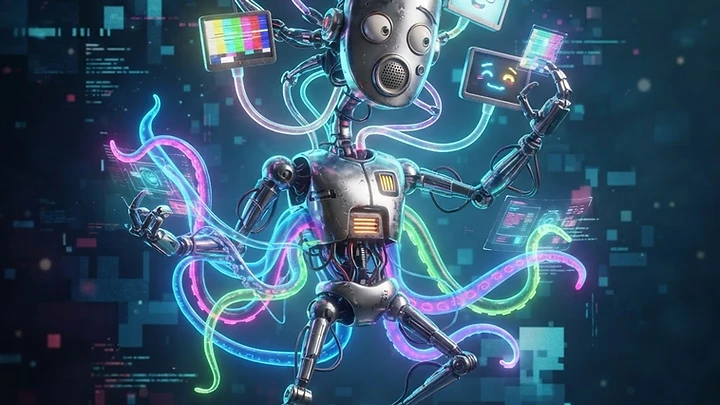
Welcome to the Surreal World of Robot Brainrot AI
If you have been scrolling through your feed lately, you have definitely seen them. Those glitchy, neon-soaked, jittery mechanical monstrosities dancing to hyper-speed audio. They are the new wave of internet culture, and they are taking over. Building a robot brainrot ai character isn't just about throwing random prompts into a machine; it is a digital art form that pushes the boundaries of what we consider 'content' in the year 2024. These characters are the digital equivalent of a fever dream, and now you have the power to cook up your own nightmare fuel.
The secret sauce behind these viral sensations lies in the intersection of generative geometry and chaotic movement patterns. When you start to create your own brainrot, you aren't just making a static image; you are conceptualizing a 3D avatar that defies the laws of physics. Whether it is a trash-can-headed cyborg or a chrome-plated entity with too many eyes, the goal is always to maximize the 'weird factor' until your brain stops trying to rationalize what it is seeing.
The Tech Behind the Glitchy Aesthetic
So, how does a robot brainrot ai actually function? At its core, the technology relies on stable diffusion models trained on high-concept surrealism and industrial textures. You need to feed your models specific keywords—like 'cyber-organic,' 'low-poly artifact,' or 'unhinged mechanical jitter'—to get that specific, crunchy aesthetic that defines current trends. If you want to see what is working right now, check out the trending brainrot section on our site to get a feel for the current vibe.
Beyond just the base model, the real magic happens in the refinement phase. Using specialized shaders that mimic 90s CGI failures or VHS distortion adds that layer of authenticity. When you use a brainrot generator, you are essentially asking the AI to hallucinate a sculpture that shouldn't exist. By layering textures—think liquid chrome, rusted wires, and glowing neon circuits—you create a character that feels like it crawled out of an old arcade machine and into your nightmares.
Refining Your Character Movement
Static images are cool, but the real robot brainrot ai content comes to life when you introduce kinetic instability. The internet loves a character that moves in ways that make people uncomfortable. Think sharp, jerky movements combined with smooth, floaty camera pans. This contrast keeps the viewer hooked because their eyes cannot settle on a single focal point.
To master this, you have to experiment with different animation speeds and skeletal rigging settings. Many of the top creators on our platform use extreme frame-skipping techniques to achieve that 'staccato' look. If you are just starting out, head over to our brainrot gallery to study how established creators handle motion. It is less about being a professional animator and more about being a chaos agent. Once you learn how to break the rigging, you have mastered the medium.
Community, Categories, and Collaboration
The beauty of the brainrot scene is that it is a collaborative playground. You don't have to keep your robot creations to yourself. By exploring various brainrot categories, you can find niche communities that focus on everything from 'Industrial Decay' to 'Neon-Dystopian Pop.' Sharing your work allows for remixing, which is where the true brainrot energy explodes. Someone might take your static robot render and turn it into a 5-second loop of it eating a digital hamburger in a void.
Remember, the goal of robot brainrot ai content is not to be pretty; it is to be memorable. Don't be afraid to push the settings to the extreme. If your character looks a little too human, it’s probably not 'brainrotted' enough. Add more sensors, more antennas, and definitely more inexplicable geometry until the results are completely unhinged.
Conclusion: Dive Into the Void
The barrier to entry for making these surreal characters has never been lower. With the right tools and a willingness to embrace total absurdity, anyone can create the next big trend on TikTok. Stop waiting for inspiration to hit and start generating it yourself. The era of digital surrealism is here, and your robot creations are the stars of the show. Get out there, break the code, and show the world what your version of the future looks like.
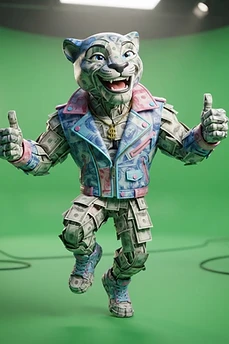
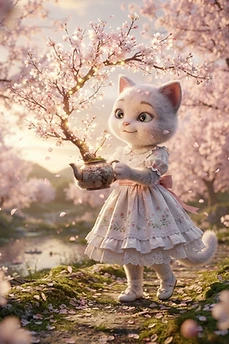
Brainrot examples







Create your own Brainrot
Mix absurd combinations, generate surreal 3D characters, and share them with the world.
Related articles
Who Is The Creator Of Brainrot? The Ultimate Meme Guide
Ever wonder who the creator of brainrot really is? Dive into the chaotic history, evolution, and future of the internet's most surreal digital trend.
Who Is The Creator Of Brainrot? A Complete Digital Guide
Ever wonder who is the creator of brainrot? Dive into the chaotic history of this AI-fueled surreal movement and learn how you can contribute to the trend.
Why Surreal Brainrot TikTok Is Taking Over the Internet
Curious why your feed is filled with 3D fever dreams? Explore the meteoric rise of surreal brainrot TikTok and learn how you can join the chaos.